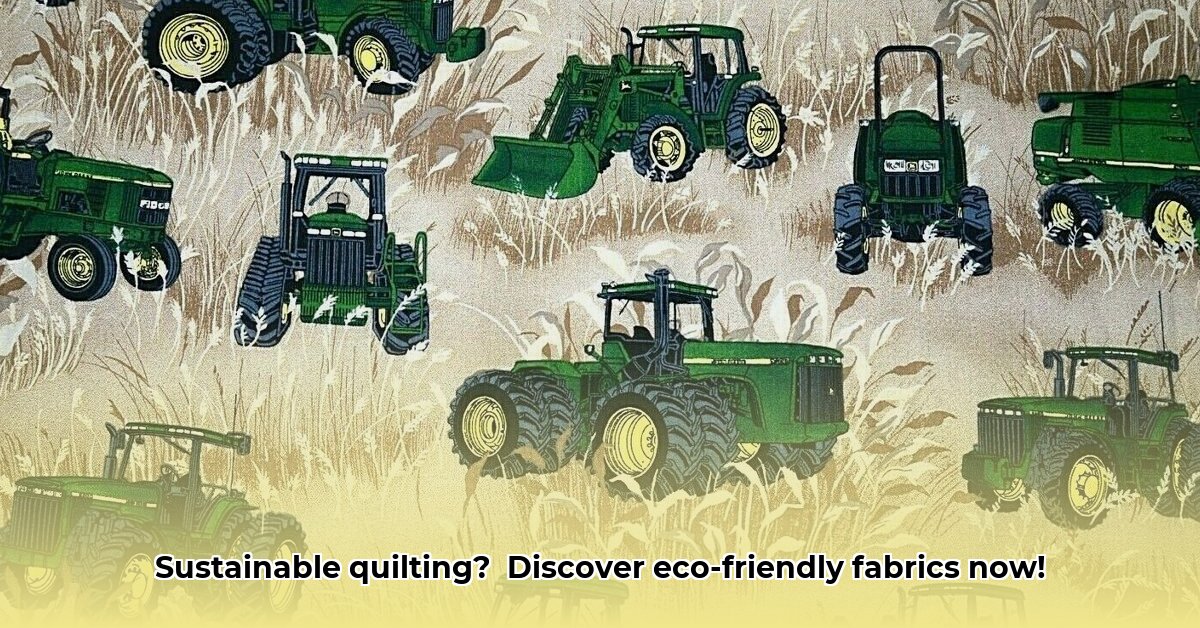
Tractor Quilting Fabric: Sewing a Sustainable Future
Who doesn't love the charm of a cozy quilt featuring adorable tractors? They evoke happy memories and add a touch of rustic appeal to any home. But have you considered the environmental impact of your quilting fabric choices? The good news is, a growing movement champions sustainable quilting, making it easier than ever to create beautiful quilts that are also kind to the planet. Let's explore this exciting intersection of craft and conscious consumption.
Choosing Eco-Friendly Tractor Quilting Fabrics
Imagine vibrant, durable tractor-themed fabrics made from organically grown cotton, dyed with eco-friendly processes. This isn't a fantasy – it's a reality! Many manufacturers are embracing sustainable practices, offering high-quality, eco-conscious options for your next quilting project. But how do you choose the best among them?
Where to Find Sustainable Materials: A Deep Dive
Finding sustainable fabrics requires a little detective work, but the rewards are immeasurable. Look for certifications like GOTS (Global Organic Textile Standard) – a gold standard for organic textiles ensuring environmental and social responsibility – or OEKO-TEX, verifying the absence of harmful substances. Prioritize durable fabrics; a long-lasting quilt reduces overall waste and environmental impact. Also consider choosing recycled materials, giving old fabrics a new purpose. Isn't it amazing to know your quilt can have a second life, too?
The Role of Manufacturers and Retailers: Transparency is Key
Manufacturers play a crucial role. Transparency is paramount; they should openly share details about their production processes, from sourcing raw materials to the final product. Independent third-party verification builds consumer trust and accountability. Investing in sustainable dyeing techniques and exploring innovative materials, like hemp or Tencel (a sustainable fabric made from wood pulp), are crucial steps toward a greener industry.
Retailers also bear a responsibility. Clear, concise labeling is essential, specifying fabric origin, materials, and any relevant environmental certifications. Retailers actively promoting sustainable brands show their commitment to environmental protection. This transparency empowers consumers to make informed choices. Wouldn't you agree that knowing where your fabric originates and how it's made adds a significant layer of value and satisfaction?
Your Power as a Quilter: Making a Difference
As a quilter, your purchasing power is significant! By demanding transparency and actively seeking sustainable options, you drive market change. Don't hesitate to ask brands about their sustainability practices; your questions create accountability and propel the industry toward greener methods. Each purchase is a vote for a more sustainable future.
Challenges and Rewards: Embracing Sustainable Practices
Transitioning to fully sustainable fabrics presents some challenges. Organic and sustainably produced materials might initially have a higher price point. Supply chains may also be less established than those for conventional fabrics. However, the environmental benefits and the satisfaction of contributing to a healthier planet far outweigh these considerations. The growing market for sustainable fabrics fosters a supportive community of quilters united by their passion for both beautiful crafts and environmental responsibility.
How to Find Sustainably Made Tractor Themed Quilting Fabric
The market for themed quilting fabrics, especially tractor designs, is expanding rapidly, highlighting strong consumer demand. Yet, readily available data on their sustainability lags. This gap presents a significant opportunity for improvement and informed consumer choices. The following steps will help you navigate the process successfully:
Prioritize Certifications: Look for globally recognized certifications like GOTS (Global Organic Textile Standard) or OEKO-TEX Standard 100. These certifications provide a clear indication of sustainable and ethically sourced materials. Do your fabrics meet these high standards of sustainability?
Demand Transparency: Choose brands that are transparent about their sourcing and production. Do they openly share their supply chain details and manufacturing processes? A brand's willingness to share information reflects its commitment to ethical and environmentally responsible practices.
Focus on Sustainable Materials: Opt for fabrics made from organic cotton, Tencel, hemp, or recycled materials. These alternatives minimize environmental impact, from resource consumption to waste reduction. Are the materials used in your chosen fabric truly eco-friendly?
Consider Dyeing Methods: Inquire about the dyeing processes used. Low-impact or eco-friendly dyes minimize water pollution and harm to the environment. Does the fabric meet the requirements of sustainable dyeing techniques?
Minimize Waste: Look for brands that employ sustainable packaging options, either using recycled materials or minimizing packaging waste. Consider the environmental footprint of the entire product lifecycle.
Key Takeaways:
- The demand for tractor-themed quilting fabrics is growing.
- Data on the sustainability of these fabrics are currently lacking.
- Consumers increasingly prioritize sustainability and ethical sourcing.
- Finding sustainable options requires careful research and consideration.
- Supporting sustainable brands promotes ethical production and environmental responsibility.
By championing sustainable fabrics and demanding transparency from brands, you're not just creating beautiful quilts; you're contributing to a healthier planet, one stitch at a time. Let's sew a sustainable future, together.
Tractor Quilting Fabric
Content about tractor quilting fabric (Auto-generated fallback due to API error).